

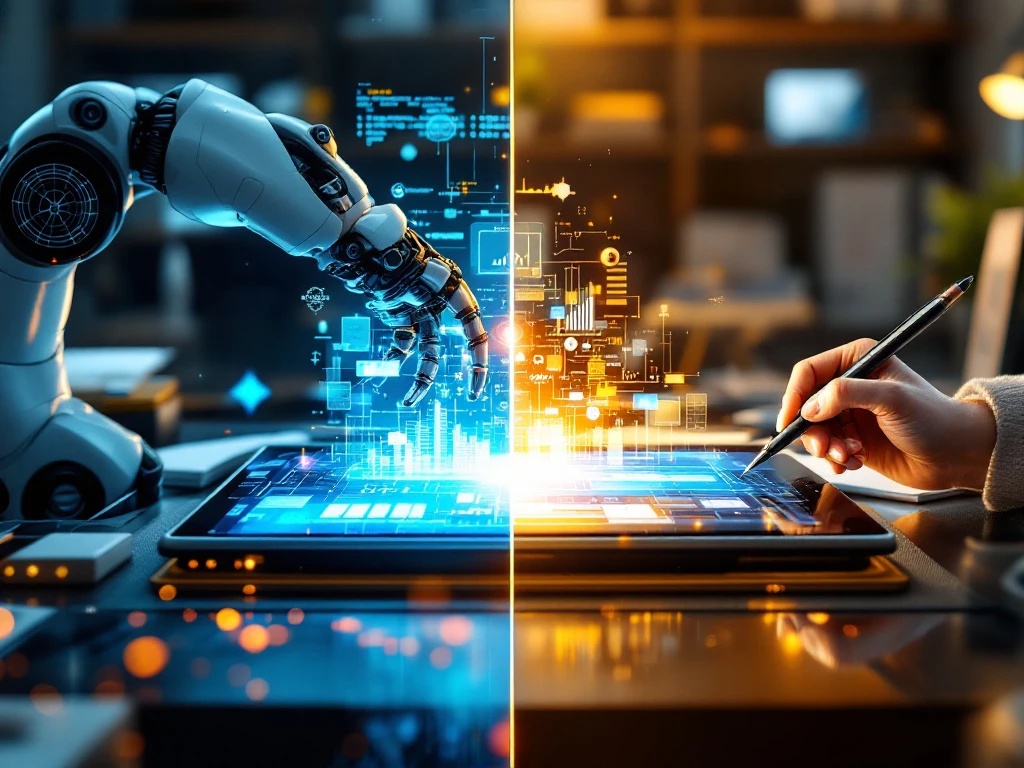
Creative automation complements human designers rather than replacing them entirely. While automation excels at handling repetitive design tasks, variations, and template-based content at scale, it cannot replicate human creativity, emotional intelligence, and strategic thinking. The technology serves as a powerful tool that frees designers from mundane tasks, allowing them to focus on higher-value creative work. The relationship between automation and human designers is evolving toward a collaborative future rather than a replacement scenario.
What is creative automation and how does it work?
Creative automation is a technology that streamlines and accelerates the design process by using software to generate design variations at scale. It works by leveraging predefined templates, rules, and assets to automatically create multiple versions of marketing materials, advertisements, and visual content. The core technology uses dynamic templates where certain elements can be modified automatically while maintaining brand consistency.
At its foundation, creative automation platforms operate on a template-based system. Designers first create master templates with designated variable elements—such as text, images, colors, or layouts. The system then applies data inputs to automatically generate variations of these templates. This might include creating versions for different markets, languages, product offerings, or promotional messages.
The technology significantly reduces manual effort by handling repetitive design tasks. For instance, when a global brand needs to adapt a single campaign across 50 markets with different languages and visuals, creative automation can generate all variations in minutes rather than requiring days of designer time. This acceleration enables marketing teams to respond quickly to trends and market opportunities.
What design tasks can creative automation effectively handle today?
Creative automation excels at template-based design tasks where variations need to be created from established frameworks. It efficiently handles the generation of multiple ad sizes, format adaptations (converting designs for different platforms like Instagram, Facebook, or display networks), and versioning for different markets or languages. These systems can automatically resize elements, reposition components, and adjust layouts to fit various specifications.
Personalization at scale is another area where creative automation proves valuable. The technology can insert customer-specific data, product information, or dynamic elements to create individualized versions of marketing materials. For example, an e-commerce company can automatically generate thousands of product images with different pricing, offers, or feature highlights.
Creative automation also effectively manages content localization—adapting designs for different geographic regions by changing languages, cultural references, or imagery while maintaining brand guidelines. It streamlines asset management by organizing, tagging, and distributing approved design elements across teams. Additionally, it helps with basic data visualization by turning numbers and statistics into standardized charts and graphs.
What are the limitations of automated design systems?
Automated design systems fundamentally lack creative thinking and conceptual innovation. They cannot generate truly original design concepts, develop new visual styles, or create breakthrough creative approaches. While they excel at executing variations within established parameters, they cannot ideate the initial creative direction that forms the foundation for these variations.
These systems struggle with understanding emotional and cultural nuance. They cannot inherently gauge how design choices might resonate emotionally with different audiences or how cultural contexts might affect interpretation. This limitation is particularly challenging for campaigns that rely on emotional connection, humor, or cultural relevance.
Automated systems also face difficulties with aesthetic judgment and subjective design decisions. They cannot determine when a layout “feels right” or when minor adjustments would improve visual balance and harmony. Complex problem-solving that requires reframing challenges or finding unexpected solutions remains firmly in the human domain. Additionally, automation tools cannot effectively handle design tasks requiring strategic thinking—understanding broader business objectives and how design supports these goals.
How are human designers adapting to work alongside automation?
Human designers are increasingly evolving into strategic creative directors who set the vision and creative direction while letting automation handle execution and variation. They focus on developing the initial concepts, establishing brand guidelines, and creating the master templates that automation systems will use. This shift allows designers to spend more time on creative thinking and less on repetitive production tasks.
Many designers are developing specialized skills in template creation and automation system management. They’re learning how to design flexible templates that can accommodate various content types and adaptation requirements while maintaining visual integrity. This requires understanding both design principles and the technical capabilities of automation platforms.
Successful designers now emphasize their uniquely human capabilities—emotional intelligence, cultural awareness, and strategic thinking. They position themselves as problem-solvers who understand business objectives and can translate them into effective visual communication. Additionally, designers are developing closer collaborations with marketing and data teams, using automation-generated performance data to refine and improve their design approaches.
Will creative automation ever completely replace human designers?
Creative automation will not completely replace human designers because original creative thinking remains inherently human. Automation excels at scaling and executing established design directions but cannot generate the initial creative breakthroughs, emotional connections, or strategic thinking that define exceptional design. The technology will continue to advance in capabilities but will remain a tool that requires human direction and oversight.
The fundamental nature of creativity involves connecting disparate ideas, understanding subtle human emotions, and solving problems in unexpected ways—capabilities that artificial intelligence has yet to replicate authentically. While automation will continue taking over more technical and repetitive aspects of design, this actually elevates the importance of human designers’ strategic and conceptual contributions.
The future of design lies in collaboration between humans and automation rather than replacement. Designers who embrace automation as a powerful tool that handles routine tasks will find more time for high-value creative work. This partnership allows for both the efficiency and scale of automation and the originality and emotional intelligence of human creativity—creating outcomes neither could achieve alone.
At Storyteq, we’ve seen this collaborative approach transform how global brands create marketing content. Our Creative Automation Platform enables design teams to focus on strategic creativity while our technology handles the production of variations at scale. This partnership between human creativity and automation technology delivers the best of both worlds—original, emotionally resonant designs produced efficiently at the scale modern marketing demands.
Ready to see how creative automation can empower your design team rather than replace it? Request a demo today and discover the potential of human creativity enhanced by automation technology.
Frequently Asked Questions
How do I determine which design tasks in my workflow are best suited for automation?
Start by identifying repetitive tasks that follow consistent patterns and require minimal creative decision-making. Track your design team’s time for 2-3 weeks, noting which activities are most time-consuming yet least creatively fulfilling. Prime candidates include resizing assets for different platforms, creating localized versions, and producing multiple variations of template-based designs. Begin with a small pilot project to automate one specific workflow before expanding to other areas.
What skills should designers develop to remain valuable in an increasingly automated environment?
Focus on strengthening uniquely human capabilities that automation cannot replicate: strategic thinking, concept development, and understanding emotional/cultural contexts. Develop expertise in designing flexible templates and systems rather than one-off pieces. Additionally, build skills in art direction, brand strategy, and cross-functional collaboration. Technical familiarity with automation platforms is valuable, but your greatest asset will be the ability to provide creative direction that guides these tools.
How can I measure the ROI of implementing creative automation for my team?
Track both quantitative and qualitative metrics. Quantitatively, measure time saved on production tasks, increase in content output volume, and reduction in production costs. Also track speed-to-market improvements and campaign performance metrics. Qualitatively, assess team satisfaction and the quality of creative work being produced with newly available time. The most compelling ROI often comes from the strategic value of having designers focus on high-impact creative work rather than repetitive production.
What are the common pitfalls when implementing creative automation, and how can I avoid them?
The biggest mistake is attempting to automate too much too quickly without proper planning. Start with a clear implementation strategy that identifies specific workflows for automation. Another common pitfall is failing to invest in proper template design – templates must be robustly built to handle variations without breaking. Additionally, neglecting to train your team or excluding them from the implementation process can create resistance. Finally, don’t expect automation to solve creative problems; it’s a production tool, not a replacement for strategic creative thinking.
How do I maintain brand consistency when using creative automation across multiple markets?
Develop a comprehensive digital brand guideline specifically for your automation system that defines non-negotiable brand elements versus flexible components. Create master templates with locked brand elements (logos, fonts, key visual styles) while allowing controlled variation in market-specific content. Implement approval workflows for newly generated assets, especially when launching in new markets. Regular audits of automated content output will help ensure brand integrity is maintained across all variations.
Can creative automation work for smaller teams with limited resources?
Absolutely. In fact, smaller teams often see proportionally larger benefits from automation as it multiplies their production capacity. Start with simpler automation tools that require less technical overhead – many template-based systems have user-friendly interfaces. Focus on automating your most frequent production tasks first. Consider SaaS solutions with subscription models rather than building custom systems, as these offer lower initial investment and faster implementation. Even automating one specific workflow can deliver significant time savings for small teams.