

AI that creates new content encompasses several sophisticated technologies including generative AI models, natural language processing systems, and creative automation platforms. These systems use machine learning algorithms and neural networks to produce original text, images, videos, audio, and other media formats. Modern content creation AI ranges from general-purpose large language models to specialized tools designed for specific creative tasks. The most advanced systems can generate highly customized content at scale while maintaining consistent brand messaging and quality standards.
What are the main types of AI that create content?
The main types of AI that create content include generative AI models, natural language processing systems, and creative automation platforms. Each type employs different approaches to generate original content with varying degrees of sophistication and specialization.
Generative AI models like GPT-4, DALL-E, and Midjourney use deep learning techniques to create human-like text, realistic images, and other media by recognizing patterns in vast datasets. These models can generate entirely new content based on specific prompts or parameters.
Natural Language Processing (NLP) systems focus specifically on understanding and generating human language. They power content tools that can write articles, create product descriptions, or generate marketing copy by analyzing language patterns and context.
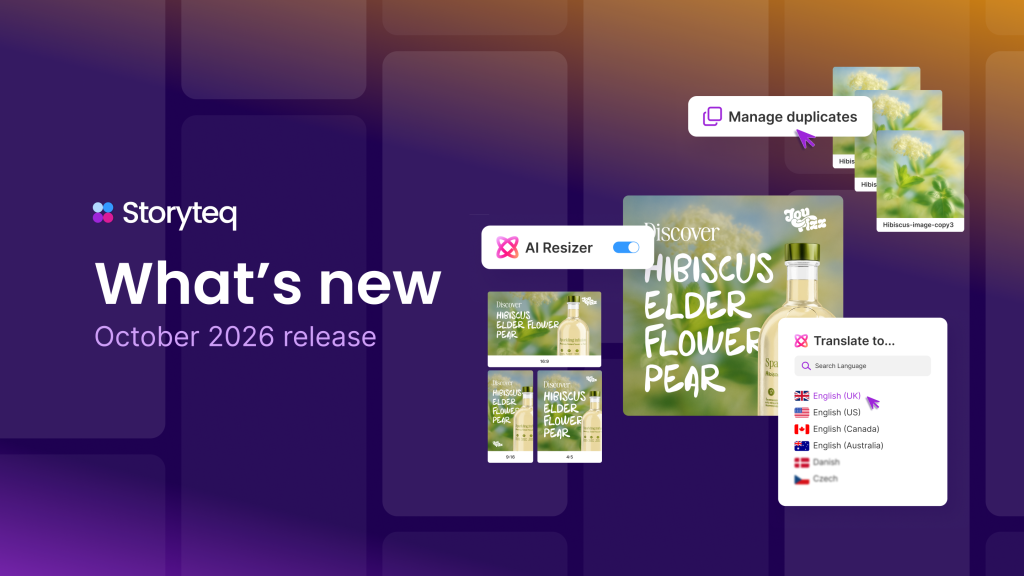
Creative Automation platforms integrate AI capabilities with design tools to produce marketing assets at scale. These systems allow marketers to create content variations while maintaining brand consistency, often featuring template-based approaches where AI helps modify and adapt core creative elements.
AI content creation tools can be further categorized by their specialization:
- Text generators (articles, scripts, ad copy)
- Image generators (illustrations, product images, ad visuals)
- Video creation tools (animations, product demos)
- Audio generators (voice-overs, music, sound effects)
- Multimodal systems (combining text, image, and other formats)
Each type serves different content needs, with some focusing on creative exploration and others on producing consistent branded content at scale.
How does generative AI transform content creation workflows?
Generative AI transforms content creation workflows by automating repetitive tasks, enabling rapid iteration, and facilitating content personalization at scale. This technology fundamentally changes how marketing teams approach content production, allowing for more experimental and data-driven processes.
The most significant workflow transformation occurs in the ideation and drafting stages. Rather than starting from scratch, marketers can prompt AI to generate multiple content concepts, outlines, or draft versions. This accelerates the initial creative process and provides diverse options to refine.
Content personalization becomes substantially more feasible with generative AI. Marketers can create template structures where AI automatically adapts messaging, visuals, or formats based on audience segments, geographic locations, or behavioral triggers. This enables truly personalized experiences without proportionally increasing production time.
Approval workflows also evolve with generative AI integration. Teams can quickly generate multiple variations for review, gather feedback on specific elements, and implement changes systematically across all related assets. This reduces revision cycles and ensures consistency across campaigns.
The technology also bridges gaps between different content formats. For example, an AI system might generate a long-form article, then automatically create social media excerpts, email content, and even complementary images from the same source material—maintaining message consistency while optimizing for each channel.
However, effective implementation requires establishing clear parameters and guidelines. The most successful workflows use AI within defined brand frameworks, where human creativity directs the AI rather than being replaced by it.
What can AI-powered content generators actually produce?
AI-powered content generators can produce a diverse range of creative assets including text, images, video, audio, and interactive content. The capabilities vary by platform, but modern systems can generate surprisingly sophisticated outputs across multiple media formats.
In the text domain, AI can create:
- Long-form articles and blog posts
- Product descriptions and catalog content
- Marketing copy and advertising headlines
- Social media posts optimized for different platforms
- Email content and newsletter templates
- Scripts for videos and presentations
For visual content, AI generators can produce:
- Original images in various styles and formats
- Product visualizations and mockups
- Banner ads and social media graphics
- Illustrations and design elements
- Image variations adapted for different markets or audiences
Dynamic video templates represent one of the most powerful AI content applications, allowing for the creation of video content where elements like text overlays, scenes, images, and even narration can be automatically adapted. This enables personalized video content at a scale that would be impossible with traditional production methods.
In audio, AI can generate voiceovers in multiple languages, create background music, produce sound effects, and even develop podcast segments or audio advertisements.
The most advanced systems integrate these capabilities, allowing for multichannel content creation from a single brief. For example, a marketer might input campaign parameters and receive coordinated assets for web, social, email, and advertising platforms—each optimized for its specific context while maintaining consistent messaging and branding.
While AI content generation has advanced dramatically, it’s worth noting that human oversight remains essential for ensuring quality, brand alignment, and creative direction. The most effective use cases leverage AI for scale and efficiency while preserving human judgment for strategic decisions.
How are brands implementing AI content creation in marketing campaigns?
Brands are implementing AI content creation in marketing campaigns through personalization at scale, multichannel content adaptation, dynamic creative optimization, and automated localization. These implementations address the growing demand for relevant, timely content across diverse platforms and markets.
Personalization at scale represents one of the most valuable applications. Brands are using AI to create thousands of variations of advertisements tailored to specific audience segments. For example, an e-commerce company might generate product showcases with messaging that changes based on the viewer’s previous interactions, geographic location, or demographic profile.
Automated localization enables global brands to efficiently adapt campaigns for different markets. AI systems can translate and culturally adapt content, adjusting language, imagery, and even cultural references to resonate with local audiences. This dramatically reduces the time and resources required for international campaign deployment.
Dynamic content optimization involves using AI to test and refine creative elements in real-time. Brands feed performance data back into AI systems, which then generate new variations emphasizing successful elements. This creates a continuous improvement cycle where campaigns evolve based on audience response.
Seasonal and promotional campaign scaling is another key implementation area. Retailers use AI to quickly update product showcases, promotional messaging, and creative assets across all channels when launching sales or seasonal collections. This ensures consistent messaging while reducing production time from weeks to hours.
Brands are also implementing modular content approaches, where AI helps create component-based assets that can be reassembled for different contexts. This allows marketing teams to maintain consistent brand elements while adapting specific components for different channels, audiences, or campaign objectives.
The most sophisticated implementations combine these approaches within integrated marketing platforms that connect content creation directly to distribution channels, analytics systems, and customer data platforms. This creates closed-loop systems where content generation becomes increasingly intelligent and targeted over time.
What are the limitations of AI content creation systems?
Despite their capabilities, AI content creation systems have significant limitations including creative originality constraints, contextual understanding gaps, brand voice inconsistencies, and ethical considerations. Understanding these boundaries is essential for effectively integrating AI into content workflows.
The most fundamental limitation is in true creative originality. While AI can combine and transform existing concepts in novel ways, it cannot yet generate truly original ideas disconnected from its training data. The most innovative concepts still require human creative input to establish new directions that AI can then help scale and adapt.
Contextual understanding remains limited compared to human judgment. AI systems may miss subtle cultural nuances, fail to recognize sensitive topics, or misinterpret brand-specific contexts. This can lead to content that technically matches requirements but misses the mark in tone or appropriateness.
Brand voice consistency presents ongoing challenges, particularly for brands with complex or nuanced positioning. AI may struggle to maintain consistent voice across diverse content types or may flatten distinctive brand characteristics into more generic expressions. This often necessitates detailed guidelines and careful review processes.
Technical limitations also exist in seamlessly blending different media types. While AI can generate text, images, and other media separately, truly integrated multimedia creation often requires human direction to ensure cohesive storytelling across formats.
Quality variability remains an issue, particularly for specialized content requiring domain expertise. AI may produce superficially correct but substantively flawed content in technical fields, requiring expert review and significant editing.
Ethical and copyright considerations present additional boundaries. Questions around the training data used in AI systems, potential biases in outputs, and proper attribution for AI-generated content remain active concerns requiring human oversight and governance.
These limitations highlight why the most effective content approaches combine AI efficiency with human creativity and judgment. The optimal workflow typically involves humans establishing creative direction and quality standards, with AI handling scaling, adaptation, and iteration under careful supervision.
For complex marketing requirements, sophisticated platforms that combine AI capabilities with robust human workflow management typically provide the best balance of efficiency and quality control.
At Storyteq, we understand these limitations and have designed our creative automation solutions to enhance human creativity rather than replace it. Our platform enables you to maintain creative control while leveraging automation to scale your content production efficiently. If you’re looking to transform your content creation process with AI-powered tools that respect brand guidelines and creative integrity, learn more about our approach to creative automation.