

AI marketing tools have revolutionized content creation by enabling marketers to produce diverse materials at unprecedented scale and speed. These platforms can generate everything from social media posts and email campaigns to product descriptions, banner ads, and even video content. Modern AI tools analyze audience data to create personalized variations, automate repetitive tasks, and maintain brand consistency across channels. The most effective solutions combine automation capabilities with human creativity, allowing marketing teams to focus on strategy while AI handles production aspects. This approach helps brands overcome content velocity demands, resource limitations, and the need for rapid campaign adaptation.
What Types of Content Can AI Marketing Systems Generate?
AI marketing systems can generate a comprehensive range of content formats that span the entire marketing ecosystem. These systems excel at creating multi-channel assets including social media posts, email marketing campaigns, product descriptions, banner advertisements, landing pages, and even video content.
For social media, AI tools can produce platform-specific content that follows character limitations and format requirements while maintaining brand voice. These systems can generate caption variations, suggest hashtags, and even create basic visual elements that align with your brand guidelines.
In email marketing, AI excels at crafting subject lines, body copy, and call-to-action elements that can be personalized based on recipient data. This allows for dynamic content adaptation within campaigns to improve engagement rates.
For digital advertising, AI marketing tools can create multiple variations of banner ads, display advertisements, and search ad copy. The technology can efficiently generate dozens or hundreds of ad versions with different messaging, visuals, and calls-to-action for testing and optimization.
Product descriptions represent another area where AI content generation shines. The technology can create compelling, SEO-friendly descriptions that highlight key benefits while maintaining consistent brand voice across large product catalogues.
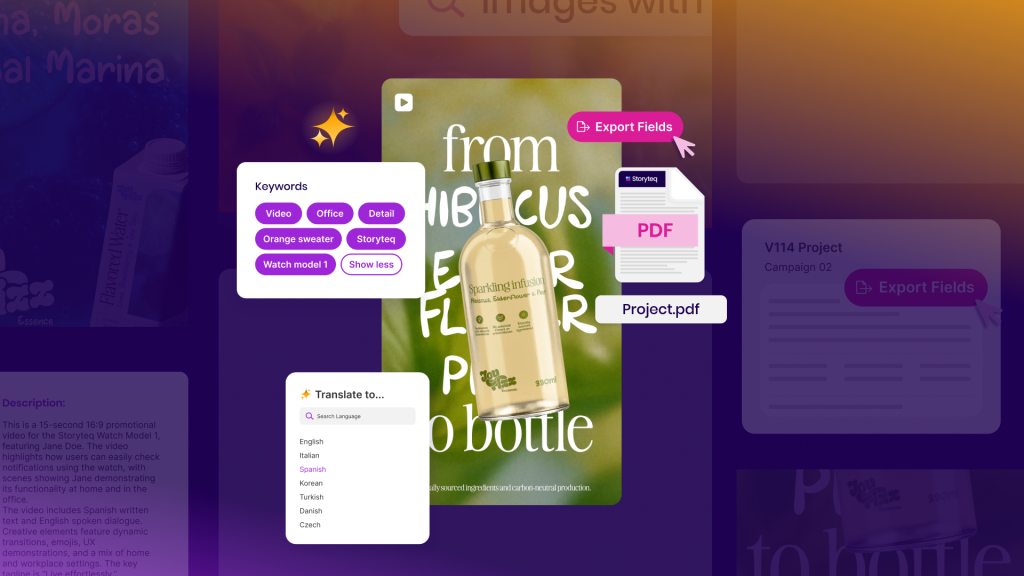
Most advanced AI marketing platforms also support video content creation through automation. This typically involves using templates where AI can swap out text elements, images, colours, and even audio components to create personalized video variations at scale.
How Do AI Solutions Enhance Personalization in Marketing Materials?
AI solutions dramatically enhance personalization in marketing materials by analyzing vast amounts of audience data to create targeted content variations. At the core of this capability is data-driven customization that goes far beyond simple name insertion in emails.
Modern AI marketing platforms can segment audiences based on multiple variables including past purchase behaviour, browsing history, demographic information, and engagement patterns. The system then automatically generates content variations tailored to each segment’s preferences and needs.
Dynamic content adaptation represents another powerful personalization feature. AI systems can adjust messaging, visuals, offers, and even tone in real-time based on user interactions or contextual factors like location, time of day, or device type. This ensures that each customer receives the most relevant version of your content.
For global brands, AI enables efficient multilingual content creation by automating translation processes while preserving brand voice and marketing intent. Advanced systems can account for cultural nuances and localization requirements, ensuring content resonates with audiences across different regions.
Behaviour-triggered content represents yet another personalization avenue. AI can identify specific user actions or milestones and automatically generate appropriate follow-up content, such as congratulatory messages, special offers, or educational materials based on where the customer is in their journey.
By implementing these AI-driven personalization capabilities, brands can create more meaningful connections with their audiences while maintaining efficiency in their content production processes. Learn more about AI-powered personalization tools that can transform your marketing approach.
What Are the Efficiency Benefits of AI in Content Production?
AI delivers remarkable efficiency benefits in content production by dramatically reducing production time while increasing output volume. The most significant advantage is the automation of repetitive tasks that would otherwise consume valuable creative resources.
Production bottlenecks typically occur when creative teams must manually produce numerous variations of the same basic content for different channels, markets, or audience segments. AI systems eliminate these bottlenecks by automatically generating these variations once a master template is created, reducing production time from days to minutes or even seconds.
Resource optimization represents another critical efficiency benefit. With AI handling routine production tasks, skilled creative professionals can focus on high-value work like strategic planning, concept development, and creative direction. This ensures human talent is deployed where it adds the most value rather than on mechanical adaptations.
AI also enables unprecedented scalability in content production. Marketing teams can produce exponentially more content without proportionally increasing headcount or budget. This is particularly valuable for campaigns requiring personalization across multiple segments or markets, where the volume of needed assets would make manual production impractical.
Error reduction is an often-overlooked efficiency advantage. AI systems maintain consistent application of brand guidelines and can automatically check for compliance issues, reducing the need for extensive review cycles and revisions. This streamlines approval processes and accelerates time-to-market.
For global campaigns, AI dramatically reduces the time required for localization by automating translations and cultural adaptations while maintaining brand consistency. This parallel processing approach eliminates the traditional sequential production bottlenecks that delay international rollouts.
How Can Brands Maintain Creative Quality With Automated Content?
Brands can maintain and even enhance creative quality with automated content by establishing robust systems that blend human expertise with AI capabilities. The foundation of this approach is comprehensive brand guideline integration into the AI platform’s parameters.
Successful implementations begin with creating master templates designed by experienced creative professionals. These templates incorporate the brand’s visual identity, tone of voice, and messaging framework, ensuring that all AI-generated variations maintain core brand elements while allowing for customization.
Quality control processes should include both automated and human review stages. Automated checks can verify technical specifications, brand guideline compliance, and basic quality standards, while human review focuses on subjective elements like creative impact and messaging nuance. This hybrid approach ensures efficiency without sacrificing quality.
Effective human-AI collaboration frameworks position AI as a creative enhancement tool rather than a replacement for human creativity. Creative teams should be trained to leverage AI capabilities strategically, using the technology to handle production tasks while focusing their expertise on concept development, creative direction, and quality assessment.
Continuous improvement mechanisms are essential for maintaining creative quality over time. This involves analyzing performance data from AI-generated content to identify successful patterns and refine the system’s parameters accordingly. Regular reviews of templates and guidelines ensure the AI system evolves alongside the brand’s creative strategy.
By implementing these approaches, brands can achieve the seemingly contradictory goals of increasing content production volume while maintaining or even enhancing creative quality. The key is viewing AI not as a creative replacement but as a powerful tool that amplifies human creative capabilities.
What Marketing Challenges Does AI Content Creation Solve?
AI content creation addresses several critical marketing challenges that modern brands face in today’s fast-paced digital landscape. Perhaps the most pressing issue it solves is meeting content velocity demands – the need to produce more content, more quickly, across more channels than ever before.
Content velocity requirements have increased dramatically with the proliferation of digital channels and the expectation for personalized experiences. Traditional production methods simply cannot scale to meet these demands without unsustainable budget increases. AI content creation enables brands to produce the necessary volume without proportional cost increases.
Resource limitations represent another significant challenge that AI helps overcome. Creative teams are often stretched thin, leading to bottlenecks, burnout, and quality compromises. By automating routine production tasks, AI allows existing creative resources to focus on high-value work while still meeting content demands.
Maintaining consistency across channels poses a substantial challenge for brands, especially when different teams or agencies manage different channels. AI content creation ensures brand elements, messaging, and visual identity remain consistent regardless of format or channel, creating a cohesive brand experience for consumers.
The need for rapid campaign adaptation in response to market changes, competitive actions, or performance data presents another challenge that AI addresses effectively. With traditional methods, changing course mid-campaign can be costly and time-consuming. AI enables quick updates across all content variations, allowing brands to be more agile and responsive.
Balancing personalization with production efficiency is perhaps the most complex challenge that AI content creation solves. Creating personalized content manually for numerous audience segments would be prohibitively expensive, but AI makes it economically viable by automating the variation process while maintaining quality standards.
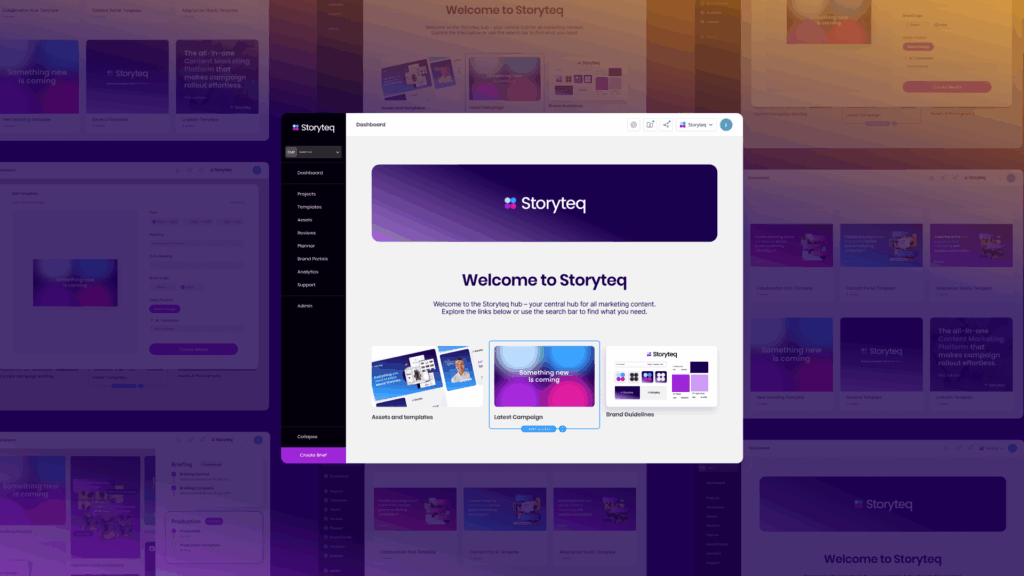
At Storyteq, we’ve developed our AI-enabled creative marketing platform specifically to address these challenges. Our solution combines the power of automation with creative flexibility, enabling global brands to deliver personalized, on-brand content at scale while maintaining creative excellence. By integrating AI content creation into your marketing workflow, you can transform these challenges into competitive advantages.