

Digital Asset Management (DAM) systems have evolved far beyond simple file storage solutions. Modern businesses generate thousands of marketing assets across multiple channels, making it impossible to manage content effectively without proper DAM features and functionality. Understanding what makes a DAM system truly effective can help you choose the right solution for your organization’s content marketing needs.
The right DAM features transform how your team creates, manages, and distributes content. From automated workflows to AI-powered search capabilities, these functionalities determine whether your DAM becomes a productivity powerhouse or just another storage repository that nobody uses.
What is digital asset management and why do businesses need DAM features?
Digital Asset Management is a centralized system that stores, organizes, and distributes digital content while providing tools for collaboration, brand governance, and content lifecycle management. Businesses need DAM features because traditional file storage methods create bottlenecks, version control issues, and brand inconsistencies that slow down marketing campaigns.
Modern marketing teams face unprecedented content demands. You need to produce personalized content for multiple channels, maintain brand consistency across global markets, and respond quickly to market opportunities. Without proper DAM functionality, teams waste hours searching for assets, recreating content that already exists, or using outdated brand materials.
DAM systems solve these challenges by providing:
- Centralized storage that eliminates content silos across departments
- Advanced search capabilities that help teams find assets instantly
- Version control that prevents outdated content from reaching customers
- Brand governance tools that maintain consistency across all touchpoints
- Workflow automation that speeds up content approval processes
- Analytics that show which assets perform best across different channels
The business impact extends beyond convenience. Companies with effective DAM systems reduce content creation costs by up to 30% by eliminating duplicate work and improving asset reuse. They also accelerate time-to-market for campaigns because teams spend less time managing files and more time creating compelling content.
What are the essential features every DAM system should have?
Every effective DAM system must include robust search functionality, automated workflows, version control, user permissions management, and integration capabilities with other marketing tools. These core features determine whether your DAM becomes a productivity driver or remains an underutilized storage system.
The most important DAM features include:
- Advanced search and filtering: Teams need to find assets quickly using keywords, tags, file types, campaigns, or visual similarity
- Automated workflows: Streamline content approval processes with customizable review cycles and notification systems
- Version control: Track asset changes and ensure teams always access the most current content
- User permissions: Control who can access, edit, or distribute specific assets based on roles and responsibilities
- Brand governance: Maintain consistency with brand guidelines, approved templates, and usage restrictions
- Analytics and reporting: Understand which assets perform best and identify content gaps
- Mobile accessibility: Enable teams to access and share content from any device or location
Beyond these basics, modern DAM systems should offer AI-powered features like automatic tagging, content suggestions, and intelligent cropping for different channels. These capabilities reduce manual work and help teams scale their content operations without proportionally increasing headcount.
The best DAM platforms also provide customization options that adapt to your specific workflows. Generic solutions often force teams to change their processes, while flexible systems adapt to existing practices and gradually introduce improvements.
How does DAM search and metadata functionality work?
DAM search functionality uses metadata tags, keywords, and AI-powered analysis to help users find assets quickly through text searches, visual similarity matching, or filtered browsing. Metadata functionality automatically captures file information and allows manual tagging to improve discoverability and organization.
Effective search capabilities work on multiple levels:
- Text-based search: Find assets using filenames, descriptions, campaign names, or custom tags
- Visual search: Upload an image to find similar assets based on color, composition, or subject matter
- Advanced filtering: Narrow results by file type, creation date, campaign, brand, or usage rights
- Faceted search: Combine multiple criteria to pinpoint specific assets quickly
Metadata serves as the foundation for all search functionality. Modern DAM systems automatically extract technical metadata like file size, dimensions, and creation date. They also use AI to analyze content and generate descriptive tags for objects, colors, text, and emotions depicted in images.
Manual metadata entry remains important for campaign-specific information, brand guidelines, and usage restrictions. The best systems make tagging easy through bulk editing tools, suggested tags based on similar content, and mandatory fields that ensure consistency across uploads.
Smart DAM platforms learn from user behavior to improve search results over time. They track which assets teams select for specific search terms and adjust rankings accordingly. This machine learning approach helps surface the most relevant content first, reducing search time and improving productivity.
What’s the difference between DAM workflow features and basic file sharing?
DAM workflow features provide structured approval processes, automated notifications, and role-based permissions that ensure content meets brand standards before publication. Basic file sharing only enables storage and download without governance, tracking, or quality control mechanisms.
File sharing platforms like Dropbox or Google Drive offer convenient storage and basic collaboration. However, they lack the sophisticated workflow management that marketing teams need for professional content operations.
DAM workflow features include:
- Approval workflows: Route content through designated reviewers with automatic notifications and deadline tracking
- Task management: Assign specific actions to team members with progress monitoring
- Comment and annotation tools: Provide feedback directly on assets with visual markup capabilities
- Status tracking: Monitor content progress from creation through final approval
- Automated notifications: Keep stakeholders informed about deadlines, approvals, and updates
These workflow capabilities prevent common content marketing problems like using outdated assets, missing approval steps, or losing track of revision feedback. They also create audit trails that show exactly who approved what content and when.
Basic file sharing becomes problematic at scale because it lacks governance controls. Teams end up with multiple versions of the same asset, unclear approval status, and no systematic way to ensure brand compliance. DAM workflows solve these issues by enforcing consistent processes that scale with your organization’s growth.
How do DAM integration features connect with other marketing tools?
DAM integration features use APIs and native connectors to synchronize content with marketing automation platforms, social media management tools, content management systems, and creative software. These integrations eliminate manual file transfers and ensure consistent asset usage across your entire marketing technology stack.
Modern marketing teams use dozens of different tools for campaign management, social media, email marketing, and content creation. Without proper integrations, moving content between these systems becomes a time-consuming manual process that introduces errors and delays.
Important DAM integrations include:
- Creative software: Direct connections with Adobe Creative Suite, Figma, and other design tools
- Marketing automation: Sync approved assets with email platforms and campaign management systems
- Social media management: Push content directly to scheduling and publishing platforms
- Content management systems: Automatically update website assets when new versions become available
- E-commerce platforms: Distribute product images and marketing materials to online stores
These integrations work bidirectionally in many cases. For example, when designers update an asset in Adobe Creative Suite, the DAM can automatically sync the new version and notify relevant stakeholders. Similarly, when marketers approve content in the DAM, it can automatically appear in their email marketing platform ready for use.
API-based integrations provide the most flexibility, allowing custom connections with proprietary systems or specialized tools. Pre-built connectors offer faster implementation for popular platforms, while webhook capabilities enable real-time synchronization across your entire marketing ecosystem.
How Storyteq helps with DAM features and functionality
We provide an advanced DAM platform that combines intelligent asset management with creative automation capabilities. Our ActiveDAM solution goes beyond traditional storage to offer proactive content management that accelerates your marketing operations.
Our platform delivers comprehensive DAM functionality through:
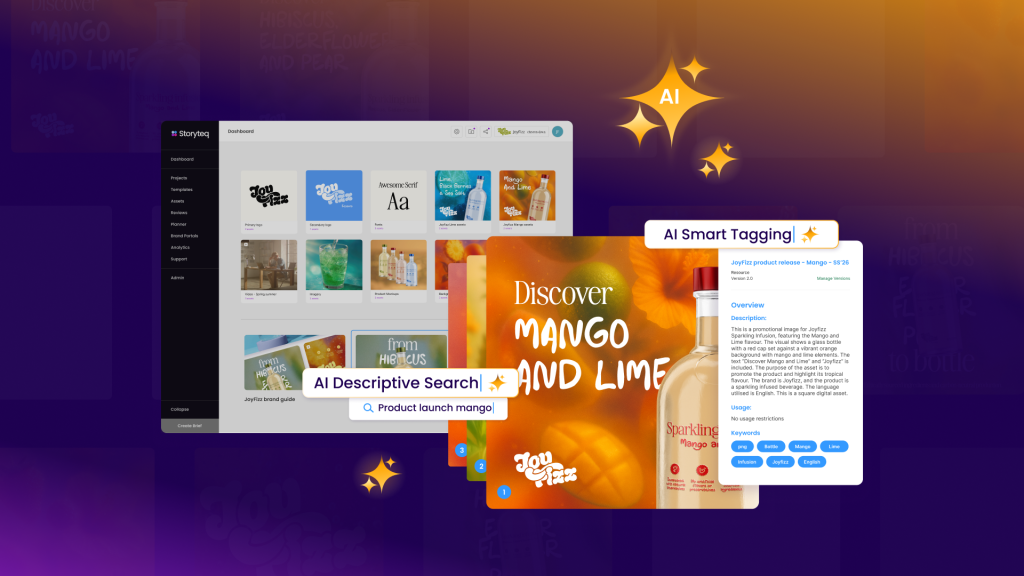
- AI-powered search and automatic tagging that makes asset discovery effortless
- Integrated workflows that connect content creation, approval, and distribution in one system
- Creative automation tools that generate channel-specific content variations automatically
- Brand portals that ensure global teams access only approved, on-brand materials
- Advanced analytics that show which assets drive the best campaign performance
- Native integrations with leading marketing and creative platforms
Global brands like Heineken, BMW, and ASOS use our DAM to reduce time-to-market while maintaining brand consistency across all markets. Our solution eliminates the fragmented workflows that slow down traditional content operations.
Ready to see how our DAM features can transform your content marketing operations? Request a demo to experience our platform firsthand and discover how we can accelerate your marketing success.