

Creative automation platforms support campaign governance by embedding compliance controls, approval workflows, and brand rules directly into the content production process. Rather than relying on manual checks after assets are created, these platforms enforce governance at the point of creation, reducing the risk of off-brand or non-compliant content reaching audiences. The sections below break down how this works across teams, markets, and workflows.
What does campaign governance actually involve?
Campaign governance is the set of processes, rules, and controls that ensure marketing content is accurate, on-brand, legally compliant, and approved before it goes live. It covers everything from visual brand standards and messaging guidelines to regulatory requirements and regional legal disclaimers. Governance applies across every stage of a campaign, from briefing and production to review and distribution.
In practice, campaign governance involves several interconnected responsibilities:
- Brand compliance: Ensuring every asset uses the correct logos, colors, fonts, and tone of voice
- Legal and regulatory review: Confirming that claims, disclaimers, and disclosures meet market-specific requirements
- Approval chains: Routing content through the right stakeholders before publication
- Version control: Tracking which asset versions have been approved and which are still in progress
- Audit trails: Maintaining records of who approved what and when, which is useful for both internal accountability and external compliance reporting
Without a structured approach to campaign governance, teams risk publishing content that contradicts brand guidelines, violates regulations, or simply has not been seen by the right people. The scale of modern campaigns, often spanning multiple channels, formats, and markets simultaneously, makes manual governance increasingly difficult to sustain.
How do creative automation platforms enforce brand compliance?
Creative automation platforms enforce brand compliance by locking brand elements into templates that content creators cannot override. Approved logos, color palettes, typography, and layout structures are built into the template itself, so every asset produced from that template automatically meets brand standards. Creators work within defined parameters rather than making freeform design decisions.
This approach shifts brand governance from a post-production review task to a pre-production control. Instead of checking whether an asset is compliant after it has been built, the platform prevents non-compliant assets from being built in the first place.
Beyond templates, creative automation platforms typically support brand compliance through:
- Locked and editable fields: Brand managers define which elements can be customized (such as local copy or imagery) and which cannot (such as the logo placement or primary brand color)
- Centralized asset libraries: Approved images, icons, and brand assets are stored in a single location, ensuring creators use only vetted materials
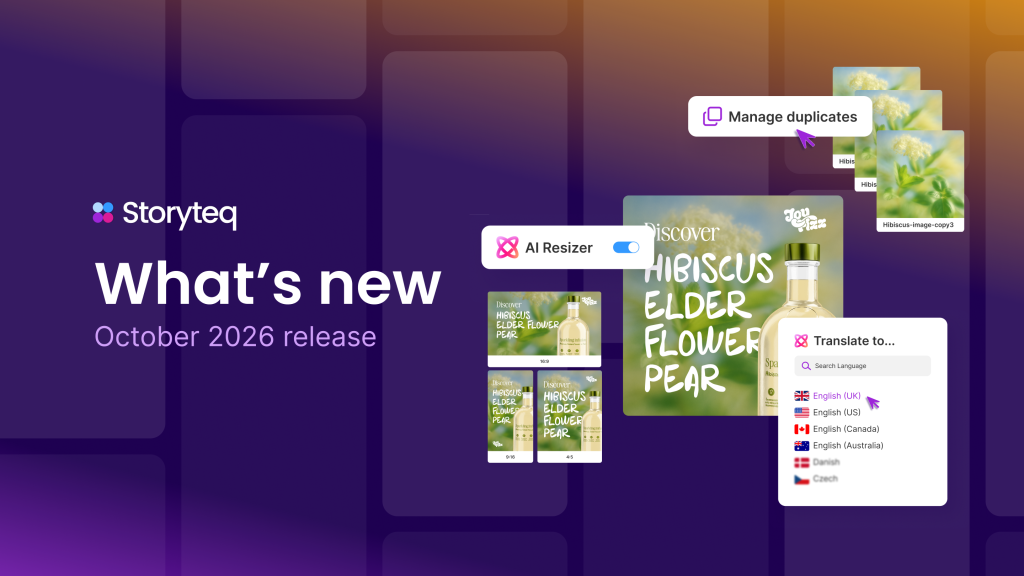
- Automated resizing and reformatting: When an asset is adapted for different formats or channels, the platform preserves brand proportions and layout rules automatically
The result is that brand consistency is maintained even when large volumes of content are being produced across multiple teams, without requiring a brand manager to manually review every single asset.
What role do approval workflows play in governance?
Approval workflows are the mechanism through which campaign governance moves from policy to practice. They define who needs to review and sign off on content before it is published, in what order, and within what timeframe. Without structured approval workflows, governance relies on informal communication, which creates gaps, delays, and the risk of content going live without proper authorization.
In a creative automation platform, approval workflows are built into the production process rather than managed separately via email or messaging tools. Reviewers receive notifications, can leave comments directly on assets, and can approve or reject content within the platform. This keeps all feedback centralized and traceable.
Well-designed approval workflows contribute to governance in two specific ways:
Structured accountability
Each step in the approval chain is assigned to a named role or individual. This means there is always a clear record of who is responsible for reviewing a given asset at a given stage. If an issue is discovered after publication, the audit trail shows exactly where the process broke down.
Reduced review cycles
When reviewers can annotate directly on the asset and see previous feedback from other stakeholders, the number of revision rounds typically decreases. Fewer cycles mean faster campaign delivery without sacrificing the governance checks that protect the brand.
How do these platforms handle governance across multiple markets?
Creative automation platforms handle multi-market governance by combining centralized brand control with localized flexibility. Global brand teams set the rules and templates at the center, while local teams adapt content within those boundaries for their specific market, language, or regulatory environment. This structure prevents local teams from drifting off-brand while still giving them the flexibility they need to be relevant in their market.
Multi-market governance typically works through a tiered permission model. Brand managers at the global level control which elements are locked and which are editable. Regional or local teams can then make permitted customizations, such as translating copy, swapping locally relevant imagery, or adding market-specific legal disclaimers, without touching protected brand elements.
This approach also supports regulatory compliance across markets. Different regions have different rules about what can be claimed in advertising, what disclaimers must appear, and how certain products or services can be promoted. By building market-specific approval steps into the workflow, platforms ensure that local legal or compliance reviewers sign off on content before it reaches audiences in their region.
What’s the difference between manual governance and automated governance?
Manual governance relies on people to check, enforce, and document compliance at each stage of content production. Automated governance embeds those checks into the platform itself, so compliance is enforced by the system rather than by individual reviewers. The core difference is where the control sits: with people or with process.
Manual governance is slow to scale. As campaign volume grows, the number of assets requiring review grows proportionally, and the workload on reviewers increases. Errors also increase, because humans checking large volumes of content under time pressure will miss things. Manual processes are also difficult to audit, since approvals often happen via email or verbal sign-off with no reliable record.
Automated governance addresses these limitations directly:
- Scalability: Template-based controls apply to every asset produced, regardless of volume, without additional reviewer effort
- Consistency: Rules are applied uniformly, so the same brand standard applies to the thousandth asset as to the first
- Speed: Automated routing, notifications, and approvals reduce the time content spends waiting for human action
- Auditability: Every action is logged within the platform, creating a complete record of who reviewed and approved each asset
Manual governance still has a role, particularly for high-stakes or novel content that falls outside standard templates. But for high-volume, repeatable campaign content, automated governance is significantly more reliable and efficient.
Which teams benefit most from governance automation?
The teams that benefit most from governance automation are those producing high volumes of campaign content across multiple channels, formats, or markets. This typically includes global brand teams, regional marketing teams, and in-house creative studios working within large enterprises. These teams face the greatest governance burden and gain the most from having compliance built into the production process.
More specifically, governance automation delivers clear benefits to:
- Brand and marketing operations teams: They can enforce brand standards at scale without manually reviewing every asset, freeing them to focus on strategy rather than checking
- Legal and compliance teams: Structured approval workflows ensure they are included in the review process for relevant content, and audit trails give them the documentation they need
- Regional and local marketing teams: They gain the ability to produce locally relevant content quickly, within guardrails that protect the global brand
- Creative teams: Automated templates reduce the time spent on repetitive production tasks, allowing creative professionals to focus on higher-value work
Governance automation is particularly useful for organizations running campaigns across many markets simultaneously, where the combination of volume, variation, and regulatory complexity makes manual oversight impractical.
How Storyteq supports campaign governance
We built our platform specifically to give marketing and creative teams the governance controls they need without slowing down production. Storyteq combines creative automation with structured campaign management so that brand compliance, approval workflows, and multi-market content production work together in a single environment.
Here is what that looks like in practice:
- Locked brand templates: Brand managers define which elements are editable and which are protected, so every asset produced from a template is automatically on-brand
- Built-in reviews and approvals: Stakeholders review and approve content directly within the platform, with all feedback, versions, and sign-offs logged in one place
- Multi-market content adaptation: Local teams can customize approved templates for their market without accessing or altering protected brand elements
- Centralized digital asset management: All approved assets are stored and accessible in one location, eliminating the risk of teams using outdated or unapproved materials
- Workflow management: Campaign tasks, deadlines, and approval steps are tracked centrally, giving brand and operations teams full visibility over where content is in the process
If your team is managing campaign governance across multiple markets, channels, or formats and finding that manual processes are creating bottlenecks or compliance gaps, we can show you how our platform addresses those challenges directly. Book a demo and see how Storyteq works in practice.