

The math hasn’t changed in years: brands aren’t going to stop running ad campaigns anytime soon. However, there’s still a key obstacle stopping them from achieving their full potential: creating ads that are irrelevant to their audience.
But that’s not entirely surprising. Today, 86% of consumers suffer from “banner blindness”, the tendency for visitors to consciously or unconsciously ignore banner-like ads. It remains one of the biggest drags on paid media performance.
Here at Storyteq, however, we don’t think that the ads themselves are the issue. By targeting everyone, everywhere, you immediately know you’re up for inefficiencies and this is the kind of advertising that has a low success rate. The red flag? Running ads that entirely lack context.
The good news is that banner blindness can now be cured thanks to dynamic video ads.
In this article, we’ll walk you through how dynamic video ads help you reach your audience contextually and why the process of creating them doesn’t have to keep you permanently glued to your computer.
Read on to learn best practices and examples from key marketers that have already adopted this strategy and now bank on dynamic videos to create stellar campaigns that convert.
For an expert take, meet the marketers we sat down with:
- Danielle Antonis, Online Marketing Consultant at Merkle
- Rian Baas, Online Marketeer at Corendon
- Charit Anchan, Digital Marketing Manager at Amazon
- Chiara Grigolini, Global Digital Content Marketer at Affinity Petcare
- Bram Peters, CRM Marketeer, felyx
What is a dynamic video ad?
Dynamic video ads are ads that you tailor based on any data input. Dynamic video ads are made of interchangeable elements such as scenes, product images, overlay text, and CTAs to make the ad relevant to the viewer.
Dynamic video ads let you show up wherever your audience is – and actually say something relevant when you get there, instead of the same generic 15 seconds everyone else is running.
💡 Platform tip
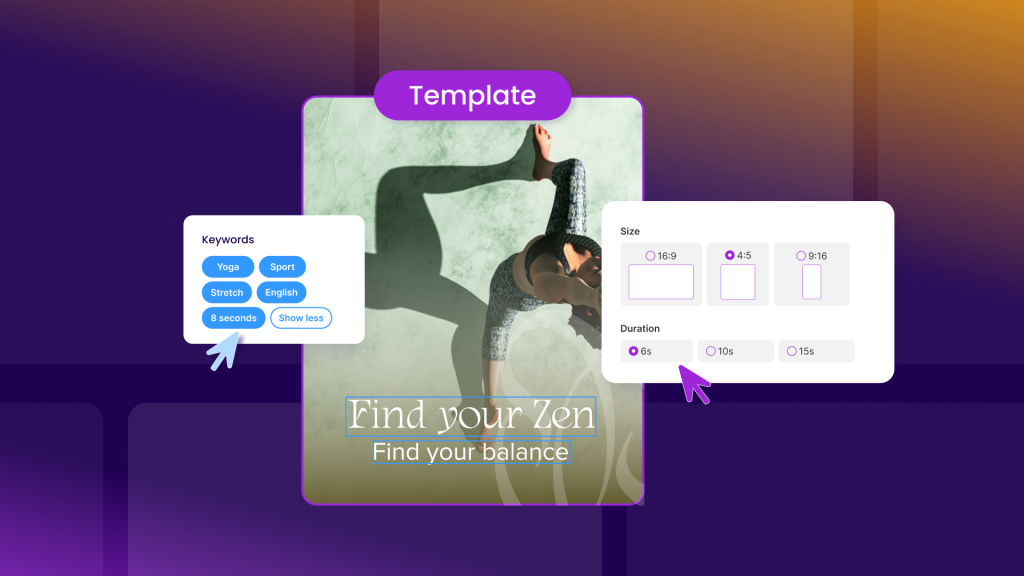
With the Storyteq platform, you can enjoy full flexibility of Creative Automation to create your own dynamic video ads in minutes. Start with your base creative, and fill out a data sheet with key information about your campaign to automatically add elements like overlays, CTAs, different languages, or product images to every ad.
Not only will these dynamic video ads present your audience with a more visual experience, but the personalization level will give them more context about your products or services and reach them where they are.
Here’s an example of what a dynamic video ad looks like:
Why should you use dynamic video ads?
Smart companies today are realizing there’s a better way to connect with people and have started to use video for everything, across the spectrum of sales, marketing and advertising. What’s more, they’re seeing a tangible return on investment.
As the old adage goes, video is no longer a nice option – it’s now a necessity. And if your team wants to increase conversion and exposure, a video marketing strategy is the only way to go.
And with ad blocking on the rise, there’s a clear sign that consumers want better ad experiences.
For marketers, this means adapting to their audience’s needs and being flexible.
According to Rian Baas, Online Marketeer at Corendon, the travel industry is a very dynamic and flexible industry where campaigns are often created in a very short period of time.
“It’s very important for us to be flexible in creating ads. We can change our preferred destination at every moment and Storyteq helps us be this flexible. We typically build a video template to create these additional videos on the spot,” mentions Rian.
“We started using Storyteq for creating dynamic video ads. We had different parameters that could change each day like price and preferred destination. We are now able to build different videos for every promotion.”
Rian Baas, Online Marketeer at Corendon
As consumers engage with brands across multiple devices and digital channels, they’re expecting a personalized, consistent, and compelling experience whenever and wherever they’re accessing your ad content, so it’s up to you as a marketer to create the type of video ad that will speak to them personally.
For instance, a 2026 report by Wyzowl finds that 91% businesses user video as a marketing tool.
As more companies recognize the demand for videos, research shows it’ll dominate the channels where consumers are. It’s not hard to see why:
- 67% of marketers who don’t use video say they plan to start using video in 2026. (Wyzowl)
- 93% of video marketers see video as an important part of their overall strategy (Wyzowl)
- Most marketers (92%) plan on spending around the same or more on video marketing in 2026. (Wyzowl)
But while statistics show the penchant for video ads, there is still so much noise out there, and to put this into practice can be hard. In the next section, we’ll show you why creating dynamic videos shouldn’t be a complex process to take on.
How to create a dynamic video ad in 3 steps
Successful advertising is all about context. With dynamic video ads, you can nail this context without spending a fortune on hundreds or thousands of variations, or using all your resources’ time to do the nitty-gritty work.
Simply set up your template, customize your creatives, and you’re ready to go.
“Storyteq makes it possible for us to create relevant and personalized ads with ease. This is important as consumers nowadays demand a personal and relevant brand experience.”
Danielle Antonis, Online Marketing Consultant at Merkle
For instance, Danielle shares how the process of creating dynamic ads works at Merkle.
🎞️ Step 1: Use the master template to create a video that is tailored to your campaign by changing the dynamic fields that you need.
🛠️ Step 2: Before pushing the video ad to the channels, download one example to check if everything is on point.
💯 Step 3: Create different ad variations and push them to the ad channels.
This is useful because instead of using different ads for different channels, Danielle’s team only gets to review them once to see if everything looks consistent across all the channels.
This is also where you can adjust the ads’ format to fit different channels such as a square video for social and a landscape video for YouTube.
The beauty of dynamic video goes beyond getting ads in front of your audience. It’s about leveraging your knowledge of your audience to create highly relevant experiences for them.
Creating dynamic video ads that convert
As people watch more videos across all channels, you now have more opportunities to use dynamic video to connect with them where they are spending their time: both on mobile and in their feed.
But, after all, video is just the vehicle—your ad strategy should be the engine that drives your message. To make an effective dynamic video, you’ll also need a great marketing strategy behind it.
For Danielle from Merkle, it’s crucial to create relevant and personalized campaigns that you can scale to the video format.
For example, when Danielle started experimenting with Facebook, her team saw some good results with dynamic campaigns for link posts and canvas ads where the CTR had significant increase.
As Danielle puts it: “Because video is becoming a more popular ad format to use for Facebook, we wanted to implement this success to dynamic videos as well. Later on, we scaled this success to other platforms such as YouTube and display. Through this step-by-step approach, we rolled out more dynamic video ads in our campaigns for clients.”
Ensure your dynamic video is suitable for the online environment
Just like a good movie, a quality dynamic video ad also grabs and sustains your viewer’s interest from the very first seconds.
When running dynamic video ad campaigns across channels, keep in mind the effective creative characteristics for each channel.
When developing content for mobile feed, consider creative characteristics—like visual cues and brand links—and how they work together to effectively deliver messages.
Danielle shares a framework her team taps into to ensure ads match the online channels:
- Make sure the video is available in impactful formats and not only landscape
- The length of the video online is advised to be 10-15 seconds
- Subtitles are recommended when the sound is turned off
- Use sound when people choose to watch the ad with the sound on to capture the full video experience
- Show your brand in the first seconds or throughout the video for better brand recall
- Flip the script where you attract your audience’s attention in the first seconds of the video
- Place your most important message at the beginning of the video as not everybody watches it till the end
- Use a CTA and adjust your video for the channel where you’re distributing it
Create dynamic videos that tell stories
With so many ads floating past unnoticed, what does it take to create something that really sticks in our minds?
Gone are the days of generic video ads with a questionable design that takes more minutes than your audience can handle.
Today, marketers know that only a few seconds of the right visuals, story, and messaging can be enough to spark interest and attract viewers.
In fact, think of your dynamic video’s design as a hook. Just like in storytelling gripping stories have a hero, in video advertising, you have an X factor that attracts people to watch more.
Use this to reel your audience towards your website where you can then offer them more content that helps them go in the right direction or give them a feel-good factor when you address them directly.
Or how Bram Peters, CRM Marketeer at felyx puts it: “Nowadays, it’s all about the customer experience and making them smile.”
At felyx, the team created a personalized “year in review” video recapping each customer’s rides, a format they’ve since repeated in later years.
“By telling a personal story to every customer, we’ve encouraged them to share the video on social media and with friends via Whatsapp. A good example of virality if you would ask me.”
Bram Peters, CRM Marketeer at felyx
Individualize your ads
When you insert dynamic elements into video ads, viewers get the uncanny sensation that everything was crafted just for them.
When you personalize your video ads to mention your audience’s industry, they will be impressed and are more likely to engage.
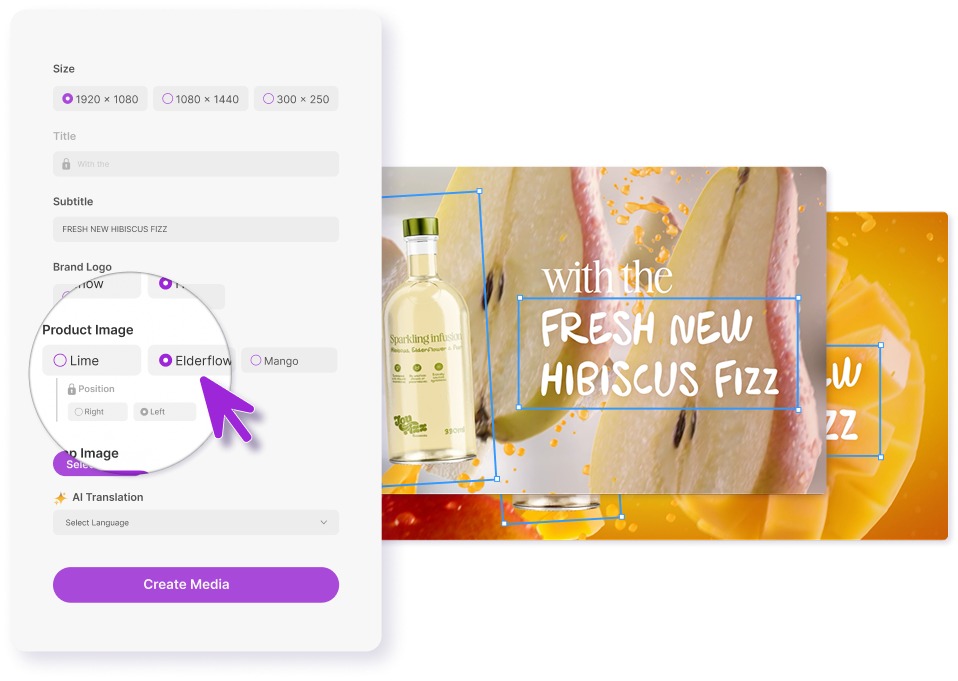
But when they’re individualized, which means personalized to an individual level to include a first name or specific information about your audience, you immediately have people’s full attention.
Take Bram Peters, CRM Marketeer at felyx, for instance: “Your dynamic videos should be relevant to the person that is viewing them. Making it personal and based on customers’ behavior is crucial to get somebody’s attention,” explains Bram.
At felyx, Bram and his team created a personalized annual overview of their customers based on their rides during 2020.
“We showed the customer’s ride at felyx in a fast, easy, and fun way. This has resulted in a lot of positive reactions and shares on social media, creating a virality effect,” points out Bram.
“We will expand our felyx “Year in Review Campaign” this year as well and make it even bigger and broader. In addition, we will look into other relevant moments in the customer journey where we can use personalized video content to engage with customers and keep them active at felyx.”
Bram Peters, CRM Marketeer at felyx
Key takeaways
- Adapt your dynamic ads to each channel you use: As people watch more videos across all channels, you now have more opportunities to use dynamic video to connect with them where they are spending their time.
- Ensure that your dynamic video is suitable to the online environment: Just like a good movie, a quality dynamic video ad also grabs and sustains your viewer’s interest from the very first seconds.
- Create dynamic videos that tell a story: Think of your dynamic video as a hook. You should have an X factor that attracts people to watch more.
- Individualize your ads: Personalize your ads to an individual level to include a first name or specific information about your audience and immediately have people’s full attention.
If your goal is to reach your audience in a more strategic and personal way, dynamic videos can help you achieve that level of engagement while staying contextual and relevant.
These are just some examples of how you can get tactical with dynamic videos. The rest is up to your imagination. Ready to connect with your audience? Book a demo now