


You use AI to create campaign-ready marketing assets by feeding it brand inputs, creative briefs, and structured templates, then letting it generate, adapt, and scale content across formats and channels automatically. The result is a production process that compresses what used to take days into hours, without sacrificing brand consistency or creative quality. Below, we answer the most common questions about how this works in practice.
What types of marketing assets can AI actually generate?
AI can generate a wide range of marketing assets, including display ads, social media creatives, video variants, email banners, landing page visuals, and dynamic product ads. The output depends on the tools you use and the templates you provide, but modern AI marketing tools cover most formats that a campaign requires across paid, owned, and earned channels.
The most common AI-generated asset types fall into a few clear categories:
- Static display ads in multiple sizes and aspect ratios for programmatic and social placements
- Video creatives with automated text overlays, transitions, and localized voiceovers
- Social media content tailored to platform-specific dimensions and formats
- Email visuals and banners adapted to different audience segments
- Dynamic product ads that pull from a product feed and render personalized combinations at scale
What makes AI content generation genuinely useful here is not just the variety of formats it covers, but the speed at which it produces them. A single brief can yield dozens of production-ready assets in the time it would normally take a designer to complete one.
How does AI adapt a single asset into multiple campaign variants?
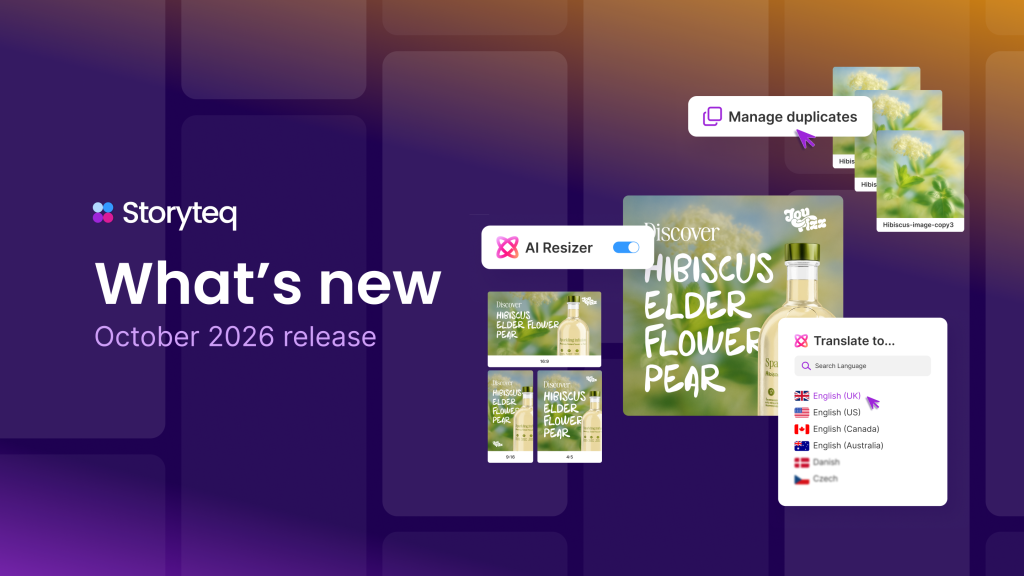
AI adapts a single asset into multiple campaign variants by treating the original as a master template, then systematically swapping out variables such as copy, imagery, color, format, language, and audience-specific messaging. This process, often called creative automation, allows one approved creative to become hundreds of on-brand variants without manual rework for each version.
The adaptation logic works across several dimensions simultaneously:
- Format resizing: A single design scales to every required ad size, from a square Instagram post to a wide leaderboard banner
- Language localization: Text fields update automatically for each market while layout and brand elements stay consistent
- Audience personalization: Messaging, offers, or product imagery change based on audience segment rules
- Channel adaptation: Timing, aspect ratios, and interactive elements adjust to match platform requirements
This approach removes the bottleneck that typically slows campaign production: the need to brief, design, and review every individual variant separately. With AI creative automation, the creative team defines the rules once, and the system executes them at scale.
What inputs does AI need to produce on-brand campaign assets?
AI needs four core inputs to produce on-brand campaign assets: brand guidelines, approved creative templates, campaign-specific content (copy, imagery, offers), and audience or channel parameters. Without these inputs, AI-generated assets risk being generic or off-brand, which undermines the consistency that makes campaigns effective.
Think of these inputs as the guardrails that shape what AI generates:
- Brand guidelines: Colors, fonts, logo usage rules, and tone of voice that the AI applies across every output
- Master templates: Approved layouts that define where each element sits and how it behaves when variables change
- Content library: Approved copy lines, product images, offer mechanics, and any campaign-specific assets
- Targeting parameters: Audience segments, languages, markets, or channel specs that determine which variants get generated
The quality of AI-generated marketing assets is directly tied to the quality of these inputs. Teams that invest time in building well-structured templates and organized content libraries get significantly better results than those who treat AI generation as a shortcut around proper creative preparation.
How do creative teams review and approve AI-generated assets?
Creative teams review and approve AI-generated assets through structured workflow tools that route content to the right stakeholders, collect consolidated feedback, and track approval status in one place. This replaces the scattered email chains and file-sharing workarounds that slow traditional review cycles and introduce version control errors.
A well-designed review process for AI-generated content typically includes:
- Automated routing that sends assets to reviewers based on asset type, market, or campaign
- In-context annotation so feedback attaches directly to the asset rather than arriving as a separate document
- Version tracking that records every change and keeps the approval history visible
- Clear status indicators that show which assets are pending, approved, or need revision at a glance
Because AI can generate large volumes of assets quickly, the review stage becomes a more important quality gate, not a less important one. Teams that streamline their approval workflows can move from generation to distribution without the process becoming the new bottleneck.
Where do AI-generated assets get distributed once they’re ready?
Once approved, AI-generated assets are distributed directly to ad platforms, digital asset management systems, content management systems, and media channels through integrations built into the creative automation platform. This removes the manual step of exporting, uploading, and trafficking assets to each destination separately.
Distribution integrations typically cover:
- Paid media platforms such as Meta, Google, and programmatic ad networks, where assets go live directly from the platform
- Digital asset management systems where approved files are stored, tagged, and made accessible to wider teams
- Brand portals that give local teams, agencies, or retail partners access to the assets they need without involving central production
- CMS and email platforms where visual assets slot into pre-built templates for web and email campaigns
Seamless distribution matters because the time between approval and activation is where campaigns often stall. When AI marketing tools connect directly to distribution endpoints, the entire production chain from brief to live campaign becomes genuinely faster.
How do you measure whether AI-created assets are performing?
You measure AI-created asset performance using the same metrics you apply to any campaign creative: click-through rate, conversion rate, engagement rate, cost per result, and return on ad spend. What changes with AI-generated assets is your ability to test more variants simultaneously, which gives you richer performance data and faster insight into what works.
The measurement advantage of AI campaign creation comes from scale. When you can produce 50 variants instead of 5, you can run meaningful creative tests across audiences, formats, and messages at the same time. This turns performance data into a feedback loop that improves future asset generation.
Useful measurement practices for AI-generated content include:
- Tagging assets with metadata that identifies the template, audience, market, and variant so performance data traces back to specific creative decisions
- Comparing variant performance within the same campaign to identify which messages, visuals, or formats drive results
- Feeding top-performing variants back into the template system to inform future production
- Tracking production efficiency metrics alongside campaign metrics to quantify the time and cost savings AI delivers
How Storyteq helps you create AI-powered campaign assets at scale
We built our platform to solve exactly the challenges described above, giving marketing and creative teams a connected system for generating, reviewing, distributing, and measuring campaign-ready assets. Here is what we provide:
- Creative Automation Platform: Generate unlimited ad variants from approved master templates, with built-in format adaptation for every channel and market
- Reviews and Approvals: Route AI-generated assets through structured review workflows with in-context feedback, version tracking, and clear approval status
- Ad Delivery Integration: Push approved assets directly to your ad platforms and distribution channels without manual trafficking
- Digital Asset Management and Brand Portals: Store, organize, and share approved assets so every team and partner works from the right, on-brand files
- Analytics: Track asset performance and production efficiency in one place, so data informs your next creative cycle
If you want to see how this works for your campaigns, request a demo and we’ll walk you through the platform with your use case in mind.