

Dynamic ad templates should include customizable text elements such as headlines and CTAs, interchangeable visual components such as product images and backgrounds, and adaptive design elements that respond to audience data. The most effective templates balance personalization with brand consistency while maintaining scalability across multiple channels and formats.
Generic ad campaigns are wasting your marketing budget
When you run the same static ad across all audiences, you’re essentially speaking to everyone and no one at the same time. Your click-through rates suffer, conversion costs increase, and you’re paying premium prices for poor performance. The solution lies in implementing dynamic elements that automatically adapt your messaging, visuals, and offers based on who’s viewing the ad, where they are in the customer journey, and which products they’ve shown interest in.
Manual ad creation is limiting your campaign scale
Creating individual ads for every audience segment, product, and platform manually consumes weeks of creative resources and delays campaign launches. You end up with inconsistent branding, missed opportunities, and creative teams buried in repetitive tasks instead of strategic thinking. Template-based automation lets you maintain creative quality while producing hundreds of personalized variations from a single master design.
What are dynamic creative elements in ad templates?
Dynamic creative elements are customizable components within ad templates that automatically change based on data feeds, audience segments, or campaign parameters. These include text fields, images, colors, layouts, and interactive elements that adapt without manual intervention while maintaining design integrity.
The foundation of any dynamic template starts with identifying which elements need to vary. Text components such as headlines, descriptions, and calls to action form the messaging layer that speaks directly to different audience segments. Visual elements, including product images, background photos, and brand colors, create the aesthetic appeal that captures attention.
Interactive elements such as countdown timers, price displays, and promotional banners add urgency and relevance to your campaigns. These components work together to create personalized experiences that feel custom-made for each viewer while operating from a single template structure. The key is designing flexibility into your creative framework from the start, ensuring each dynamic element serves a specific purpose in driving engagement and conversions.
Which text elements should be customizable in ad templates?
Headlines, descriptions, calls to action, pricing information, and promotional offers should be customizable in ad templates. These text elements directly impact messaging relevance and conversion rates, making them the most important components to personalize for different audiences and campaign objectives.
Headlines carry the primary message weight and should adapt based on product categories, audience interests, or promotional campaigns. For example, a fashion retailer might use “New Summer Collection” for seasonal shoppers versus “Professional Workwear” for business audiences. This targeted approach increases relevance and click-through rates significantly.
Descriptions provide supporting context and should reflect the specific value proposition for each audience segment. A travel company might emphasize “Family-Friendly Activities” for parents while highlighting “Adventure Sports” for younger demographics. Calls to action need to match the customer journey stage, using “Learn More” for awareness campaigns and “Buy Now” for conversion-focused efforts.
Pricing and promotional elements create urgency and value perception. Dynamic pricing displays can show location-specific offers, while promotional text can highlight relevant discounts or limited-time deals. This level of customization ensures your message resonates with each viewer’s specific needs and motivations.
How do dynamic images improve ad template effectiveness?
Dynamic images improve ad template effectiveness by displaying relevant products, showcasing appropriate lifestyle contexts, and adapting visual styles to match audience preferences. This visual personalization increases engagement rates and creates stronger emotional connections with viewers compared to static imagery.
Product imagery should automatically display items that match user browsing behavior or purchase history. An e-commerce platform can show previously viewed products or related items, creating a personalized shopping experience that drives higher conversion rates. This approach transforms generic advertising into targeted product recommendations.
Lifestyle and contextual images help audiences visualize themselves using your products or services. A fitness brand might show different workout environments based on user location data, displaying outdoor activities for suburban audiences and gym settings for urban viewers. This contextual relevance makes ads feel more personally relevant and actionable.
Background elements and color schemes can adapt to seasonal trends, local preferences, or brand campaigns. Weather-based creative optimization shows sunny beach scenes during summer months and cozy indoor settings during winter, creating timely relevance that captures attention and drives engagement across different time periods and geographic locations.
What design elements should adapt based on audience segments?
Color schemes, typography, layout structures, and visual styles should adapt based on audience segments. Different demographics respond to distinct design aesthetics, and personalizing these elements increases engagement while maintaining brand recognition across diverse target groups.
Color psychology plays a significant role in audience response, with younger demographics often preferring bold, vibrant palettes while professional audiences respond better to sophisticated, muted tones. A financial services company might use conservative blues and grays for business clients while employing energetic greens and oranges for younger consumers starting their financial journey.
Typography choices communicate brand personality and should reflect audience expectations. Tech-savvy audiences appreciate modern, clean fonts that suggest innovation, while luxury markets respond to elegant serif typefaces that convey premium quality. Font sizing and hierarchy also need adjustment based on device usage patterns and accessibility requirements for different age groups.
Layout structures should accommodate varying content lengths and cultural reading patterns. Western audiences scan left to right, while other markets may require different visual flows. Mobile-first designs need simplified layouts with larger touch targets, while desktop versions can include more detailed information and complex interactive elements that enhance the user experience.
How do you balance creativity with template scalability?
Balance creativity with template scalability by establishing design systems with flexible parameters, creating modular components that maintain brand consistency, and setting clear guidelines for dynamic element variations. This approach preserves creative quality while enabling automated production of multiple ad variants.
Design systems provide the creative foundation that ensures consistency across all template variations. Establish core brand elements such as color palettes, typography hierarchies, and spacing rules that remain constant while allowing specific components to change. This framework gives creative teams the freedom to innovate within defined boundaries that protect brand integrity.
Modular component design breaks complex layouts into reusable pieces that can be mixed and matched for different campaigns. A header module, product showcase section, and call-to-action footer can combine in various configurations while maintaining visual harmony. This approach reduces design time while expanding creative possibilities exponentially.
Clear variation guidelines prevent template abuse while encouraging creative exploration. Define which elements can change, acceptable ranges for modifications, and quality standards for dynamic content. Regular template audits ensure scalability doesn’t compromise creative excellence, and feedback loops between creative and marketing teams drive continuous improvement in template effectiveness and brand representation.
How Storyteq helps with dynamic ad template creation
We provide comprehensive tools that streamline dynamic template creation and management. Our Creative Automation Platform enables you to build sophisticated templates with customizable elements while maintaining brand consistency across all variations.
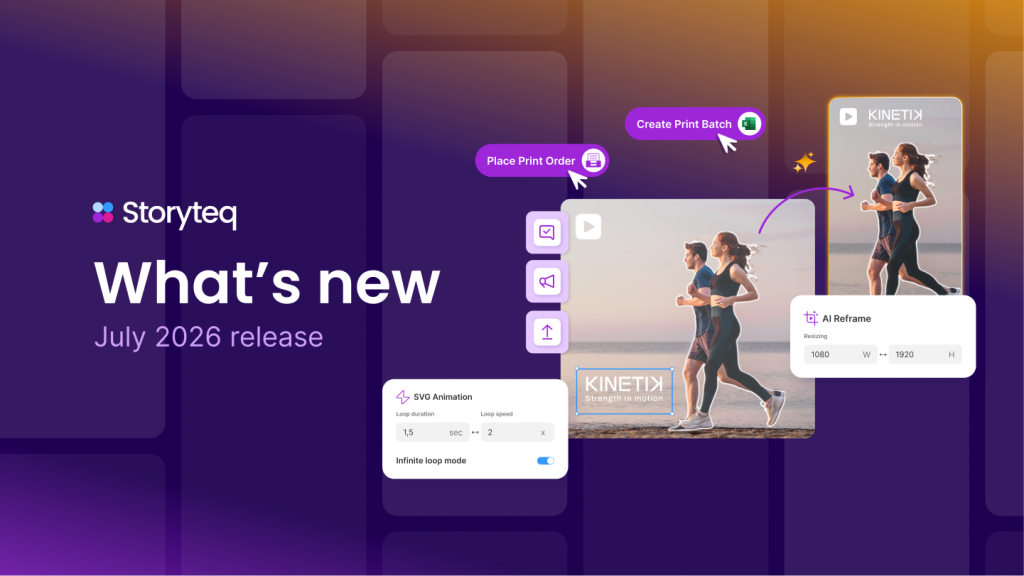
- Template Builder with AI capabilities: Create dynamic templates with automatic resizing, intelligent text adaptation, and multilingual translation features.
- Seamless After Effects integration: Transform existing video projects into dynamic templates without disrupting your current workflows.
- Collaborative template sharing: Enable creative and marketing teams to work together efficiently with shared template libraries and approval processes.
- Automated content generation: Produce unlimited ad variations instantly using data feeds and audience segmentation rules.
Our platform eliminates the traditional trade-off between creativity and scalability, allowing you to maintain high creative standards while producing personalized content at scale. Request a demo to see how our dynamic template solutions can transform your ad creation process.