

Digital Asset Management has evolved from simple file storage to sophisticated platforms that power modern marketing operations. As brands manage thousands of creative assets across multiple channels and markets, understanding the difference between basic and advanced DAM features becomes vital for making informed technology investments.
While basic DAM solutions focus on storage and organization, advanced platforms offer intelligent automation, comprehensive analytics, and seamless workflow integration that transform how marketing teams operate. This distinction affects everything from daily productivity to campaign performance and brand consistency.
What is digital asset management and why do brands need it?
Digital Asset Management (DAM) is a software system that stores, organizes, and distributes digital content like images, videos, documents, and brand assets. DAM platforms serve as a single source of truth for all marketing materials, eliminating manual errors, lost content, and inefficient workflows.
Brands need DAM systems because modern marketing requires managing massive volumes of content across multiple channels, markets, and teams. Without centralized asset management, organizations face several critical challenges:
- Content scattered across different tools and platforms creates silos
- Teams waste time searching for approved assets or recreating existing content
- Version control becomes impossible, leading to outdated or off-brand materials
- Collaboration between creative teams, marketing, and external agencies becomes inefficient
- Brand consistency suffers when teams cannot access current brand guidelines and assets
Modern DAM platforms address these issues by providing centralized storage with advanced search capabilities, automated workflows, and real-time collaboration tools. They enable brands to maintain control over their content while empowering teams to work efficiently at scale.
What’s the difference between basic and advanced DAM features?
Basic DAM features focus on storage and simple organization through folder structures, while advanced DAM features include AI-powered automation, intelligent tagging, workflow management, and comprehensive analytics that optimize content performance.
Basic DAM platforms typically offer:
- File storage and basic folder organization
- Simple search functionality
- Basic user permissions
- Download and sharing capabilities
- Version history tracking
Advanced DAM platforms expand these capabilities with:
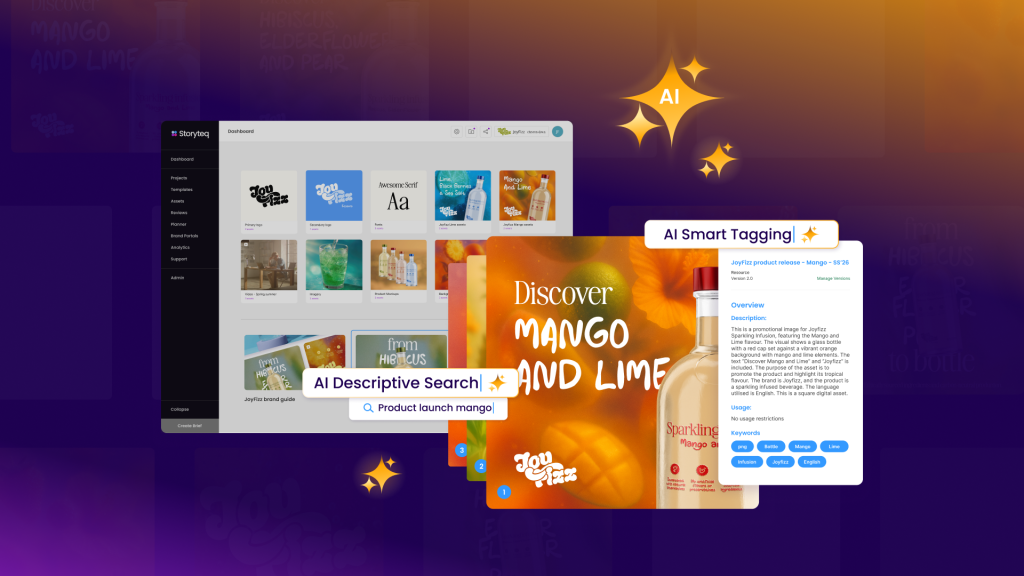
- AI-powered auto-tagging and metadata generation
- Smart taxonomy that goes beyond folder structures
- Automated workflow routing and approval processes
- Dynamic asset transformation and format conversion
- Advanced analytics and usage tracking
- Integration with creative tools and marketing platforms
- Brand compliance monitoring and enforcement
- Multi-language support and global collaboration features
The difference lies in how these platforms handle scale and complexity. Basic DAM works for small teams with limited content needs, while advanced DAM becomes necessary when organizations need to manage thousands of assets, coordinate global teams, and maintain brand consistency across multiple markets and channels.
How do advanced metadata and tagging features improve asset discovery?
Advanced metadata and tagging features use AI automation and smart taxonomy to make assets instantly discoverable through predictive search, dynamic filters, and contextual recommendations, replacing time-consuming manual folder navigation.
Traditional DAM systems rely on folder structures that mirror how we organize physical files. This approach becomes inefficient when dealing with large volumes of digital content because assets often fit multiple categories, making them difficult to locate. Advanced metadata systems solve this by:
AI-Powered Auto-Tagging
Machine learning algorithms automatically analyze uploaded assets and generate relevant tags based on visual content, text elements, colors, and other characteristics. This eliminates the manual work of tagging each asset while ensuring consistent, comprehensive metadata.
Smart Taxonomy
Instead of rigid folder structures, advanced DAM platforms use flexible taxonomy that allows multiple classification methods. Assets can be tagged by campaign, product, region, format, usage rights, and brand guidelines simultaneously, making them discoverable through various search paths.
Predictive Search
Advanced search engines learn from user behavior and suggest relevant assets as you type. They understand context and relationships between different content types, surfacing related materials that might not match exact search terms but could be useful for current projects.
These features dramatically reduce the time teams spend searching for assets, from minutes or hours down to seconds, while improving the likelihood of finding the most appropriate content for each use case.
What workflow automation features separate enterprise DAM from basic solutions?
Enterprise DAM platforms include automated approval routing, custom workflow configuration, and integration with creative tools that eliminate manual handoffs and bottlenecks, while basic solutions require manual file management and approval processes.
Workflow automation becomes critical when multiple stakeholders need to review, approve, and modify content before publication. Enterprise-level features include:
Automated Approval Routing
Content automatically flows to the right reviewers based on predefined rules. For example, assets for a specific market might route to regional brand managers, while global campaigns require approval from headquarters teams.
Custom Workflow Configuration
Organizations can design workflows that match their specific processes, whether centralized or decentralized. This flexibility accommodates different team structures and approval hierarchies without forcing teams to change their working methods.
Integration with Creative Tools
Advanced DAM platforms connect directly with Adobe Creative Suite, allowing designers to access assets and publish completed work without leaving their creative environment. This eliminates the download-edit-upload cycle that slows down production.
Real-Time Collaboration
Stakeholders can provide feedback, request changes, and approve content within the DAM platform. Comments and revisions are tracked automatically, creating a complete audit trail for each asset.
These automation features reduce project timelines from weeks to days by eliminating manual coordination and ensuring that content moves efficiently through approval processes without human intervention.
How do advanced analytics and reporting features benefit marketing teams?
Advanced analytics features provide real-time insights into asset performance, usage patterns, and campaign effectiveness, enabling data-driven content decisions and optimization strategies that basic DAM systems cannot support.
While basic DAM platforms might track downloads and basic usage statistics, advanced analytics offer comprehensive insights that transform how marketing teams approach content strategy:
Asset Performance Tracking
Teams can see which assets generate the most engagement, conversions, or brand awareness across different channels and markets. This data helps identify high-performing creative elements that can be repurposed or adapted for new campaigns.
Usage Pattern Analysis
Analytics reveal how different teams and regions use content, highlighting gaps in the asset library or opportunities for better content distribution. This intelligence helps prioritize future content creation efforts.
Campaign Optimization Insights
By tracking asset performance across multiple touchpoints, teams can optimize campaigns in real time, swapping underperforming elements for more effective alternatives without starting from scratch.
ROI Measurement
Advanced platforms connect content usage to business outcomes, helping teams demonstrate the value of their creative investments and make informed decisions about resource allocation.
These insights enable marketing teams to move beyond guesswork and optimize their content strategies based on concrete performance data, ultimately improving campaign effectiveness and reducing wasted creative resources.
When should a company upgrade from basic to advanced DAM features?
Companies should upgrade to advanced DAM features when they manage over 1,000 assets, coordinate multiple teams or markets, experience workflow bottlenecks, or need detailed performance analytics to optimize their content strategy.
Several indicators suggest that basic DAM capabilities no longer meet organizational needs:
Scale and Volume
When your asset library grows beyond what folder structures can efficiently organize, or when teams spend significant time searching for content, advanced search and AI-tagging become necessary for productivity.
Global Operations
Organizations operating across multiple markets, languages, or time zones need advanced collaboration features, multi-language support, and automated workflows that can function without constant manual coordination.
Complex Approval Processes
If content approval involves multiple stakeholders, compliance requirements, or brand guidelines that must be enforced consistently, automated workflow management becomes valuable for maintaining quality and speed.
Performance Optimization Needs
When marketing teams need to demonstrate ROI, optimize campaign performance, or make data-driven decisions about content creation, advanced analytics become necessary for strategic planning.
Integration Requirements
Organizations using multiple marketing tools, creative software, or publishing platforms benefit from advanced DAM systems that integrate seamlessly with existing technology stacks.
The upgrade decision often comes down to whether the time and resources saved through automation justify the additional investment in advanced features.
How Storyteq helps with digital asset management
We provide an integrated Asset Manager that combines centralized storage with creative automation, eliminating the need for separate DAM tools while streamlining your entire content production workflow. Our platform goes beyond traditional asset management by connecting storage directly with creation, review, and distribution processes.
Our advanced DAM features include:
- AI-powered asset organization with intelligent tagging and search capabilities
- Seamless integration with our creative automation tools for direct asset utilization
- Advanced workflow management that connects asset storage with approval processes
- Real-time collaboration features that enable global teams to work efficiently
- Comprehensive analytics that track asset performance across all channels
- Dynamic asset transformation that adapts content for different formats and platforms
Ready to see how our integrated approach to digital asset management can streamline your creative workflows? Request a demo to discover how we help global brands like BMW, ASOS, and Heineken manage their content more efficiently.